
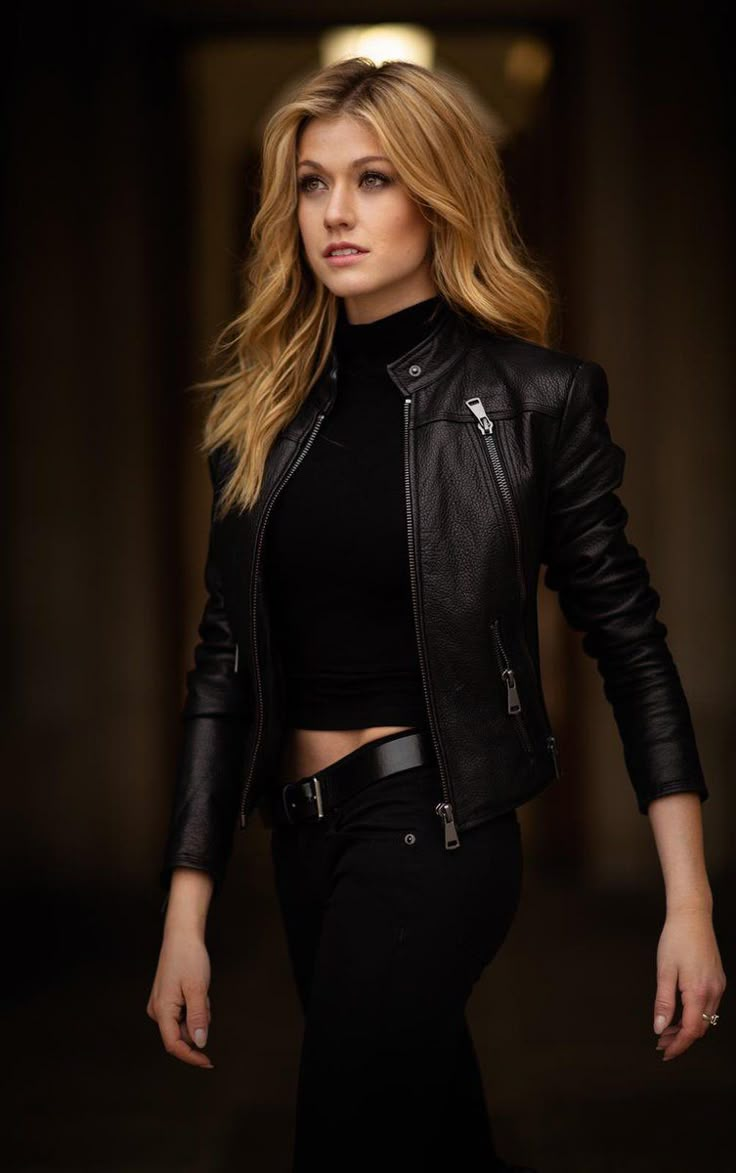
The leather jacket has long been seen as a symbol of rebellion and cool—but when women wear leather, it takes on a deeper, more complex meaning. Over the decades, women in leather have redefined what power, style, and resistance look like, transforming a garment once seen as masculine into a powerful tool of self-expression and feminist identity.
Let’s explore how women have made leather their own—from subculture icons to high fashion trailblazers.
1940s–1950s: Quiet Defiance in a Man’s World
While leather was originally tied to male military and biker uniforms, women began adopting leather jackets post-WWII, often in subtle rebellion. It wasn’t widely accepted—but it was quietly radical.
Key Milestone:
-
Motorcycle clubs and female riders began to wear leather, challenging gender roles and claiming space in a male-dominated scene.
1960s–1970s: Feminism Meets Fashion
As the second-wave feminist movement took hold, women started using clothing—including leather—to signal independence and nonconformity.
Style Shifts:
-
Rock and punk musicians like Suzi Quatro and Joan Jett wore leather jackets and pants as part of their signature look.
-
Leather became a tool to reject hyper-femininity and embrace raw strength.
“I wear the pants in this band—and the leather too.” – Joan Jett (unofficially)
1980s–1990s: Leather Goes Mainstream—With Attitude
During this era, leather moved from rebellion to fashion iconography. Designers brought it to the runway, while celebrities helped it go mainstream.
Icons:
-
Madonna combined leather corsets and jackets with lingerie in her Like a Virgin and Express Yourself eras, mixing sexual empowerment with street style.
-
Grace Jones wore bold, angular leather pieces that embodied both androgyny and authority.
Feminist Symbolism:
Leather in these decades wasn’t just edgy—it became a declaration of autonomy. Women could be bold, sexy, and powerful, all on their own terms.
2000s–2010s: From Pop Stars to CEOs
As more women rose in both creative and corporate spaces, the leather jacket evolved into a wardrobe staple that balanced toughness with polish.
-
Beyoncé, Rihanna, and Lady Gaga wore leather on stage as armor—strong, commanding, and unapologetically feminine.
-
In everyday fashion, women wore leather blazers and jackets to the office, reimagining it as a symbol of professional empowerment.
Today: Leather as Feminist Armor
In 2025, women continue to embrace leather not just for fashion—but for meaning. Whether it’s vintage, vegan, oversized, or tailored, leather speaks volumes.
What It Represents Now:
-
Strength: A material that resists wear and tear—just like the women who wear it.
-
Sexual autonomy: Women styling leather on their own terms, not for the male gaze.
-
Inclusivity: Plus-size, trans, and nonbinary individuals are expanding what “women in leather” looks like.
Fashion Examples:
-
Oversized moto jackets worn over dresses = soft + strong
-
Leather trench coats in bold colors = modern power moves
-
Vegan and plant-based leather = feminism meets sustainability
✊ Leather as a Feminist Statement
What started as a garment designed for utility and masculinity is now a tool of female empowerment. In every decade, women have reclaimed leather—redefining it as a symbol of control, independence, and identity.
Whether you’re wearing it on a bike, a stage, or a boardroom floor, leather tells the world:
I’m here. I’m strong. And I’m not afraid to take up space.
Final Thoughts
The history of women in leather is the history of fashion as resistance. Every stitch, every zipper, every bold silhouette is part of a larger narrative about freedom, feminism, and fearlessness.
As trends come and go, one thing stays true: when a woman wears leather, she’s never just dressing up—she’s making a statement.